The Australian partner visa allows the spouse or de facto partner of an Australian citizen, permanent resident, or eligible New Zealand citizen to live in Australia permanently. It is one of the most commonly applied-for visas in the country - and one of the most expensive, with government fees alone exceeding $9,365. Getting it right the first time matters.
This guide focuses on the onshore partner visa pathway - Subclass 820 (temporary) leading to Subclass 801 (permanent) - which is for applicants who are already in Australia. If you are applying from outside Australia, the offshore equivalent is the Subclass 309/100. The requirements and evidence are largely the same for both pathways. For the official visa page, visit the Department of Home Affairs partner visa page.
How the Partner Visa Works
The partner visa is a two-stage process. You lodge a single application that covers both stages:
Stage 1 - Subclass 820 (Temporary): If the Department of Home Affairs is satisfied that you are in a genuine relationship with your sponsoring partner, you are granted the temporary 820 visa. This allows you to live, work, and study in Australia, access Medicare, and travel in and out of the country while your permanent visa is being assessed.
Stage 2 - Subclass 801 (Permanent): Approximately two years after lodging your application, you become eligible for assessment for the permanent 801 visa. The Department will check that your relationship is still genuine and continuing. If satisfied, the permanent visa is granted, giving you the right to live in Australia indefinitely, sponsor eligible relatives, and apply for Australian citizenship.
Fast-track for long-term relationships: If you have been in a relationship with your partner for at least three years at the time you apply (or two years if you have a dependent child together), you may be granted both the 820 and 801 visas at the same time, skipping the two-year waiting period.
Eligibility Requirements
To apply for the onshore partner visa, both the applicant and the sponsor must meet specific criteria:
Applicant:
- Must be in Australia at the time of application and when the 820 decision is made
- Must be married to, or in a de facto relationship with, an Australian citizen, permanent resident, or eligible New Zealand citizen
- De facto couples must generally have lived together for at least 12 months (unless the relationship is registered in an Australian state or territory)
- Must meet health and character requirements, including a visa health examination and police clearances
- Must hold a substantive visa or certain bridging visas when applying
Sponsor:
- Must be an Australian citizen, permanent resident, or eligible New Zealand citizen
- Must be approved by the Department as a sponsor
- Must meet character requirements
- Sponsorship limitations apply - you generally cannot sponsor a partner if you have previously sponsored two partners, or if you were sponsored as a partner yourself in the last five years
Australia recognises both married and de facto relationships (including same-sex relationships) for partner visa purposes. If you are in a de facto relationship, you will generally need to show that you have lived together for at least 12 months, unless your relationship is registered under a state or territory relationship registration scheme.
Proving a Genuine Relationship
The most critical part of a partner visa application is demonstrating that your relationship is genuine and continuing. The Department assesses this across four key areas:
Financial aspects: Evidence that you share finances or support each other financially. This can include joint bank accounts, shared bills and utilities, joint leases or mortgage documents, shared insurance policies, and evidence of financial dependence or support.
Household aspects: Evidence that you live together and share household responsibilities. Joint tenancy agreements, shared household duties, correspondence to the same address, and evidence of shared living arrangements all contribute here.
Social aspects: Evidence that your relationship is recognised by family, friends, and the community. This includes statutory declarations (Form 888) from Australian citizens or permanent residents who know your relationship, photos together over time, evidence of joint social activities, travel together, and correspondence that refers to both of you as a couple.
Commitment: Evidence of your mutual commitment to a shared life. This includes the length of your relationship, knowledge of each other's personal circumstances, plans for the future, and how you have maintained your relationship through any periods of separation.
Tip: The Department looks at the overall picture across all four areas. You do not need to provide evidence in every single subcategory, but a strong application will include diverse evidence spread across all four areas. Quality matters more than quantity - a few compelling documents are better than dozens of weak ones.
Worked Example: Ana and James
Ana is a Brazilian national living in Australia on a student visa. She and James, an Australian citizen, have been in a de facto relationship for 18 months and living together for 14 months. They have a joint bank account, are both listed on their rental lease, share a phone plan, and have travelled together to Brazil to visit Ana's family. They provide four Form 888 statutory declarations from friends and family, dozens of photos spanning their relationship, joint travel itineraries, and a detailed personal statement about how they met and their future plans. Ana arranges her health examination and police clearances from Brazil and Australia. Their application is assessed as genuine, and Ana receives her temporary 820 visa within 18 months. A partner visa agent helped them compile evidence that addressed all four assessment areas comprehensively.
How Much Does the Partner Visa Cost?
The partner visa is one of the most expensive visa applications in Australia's immigration system. The single application fee covers both the temporary and permanent stages.
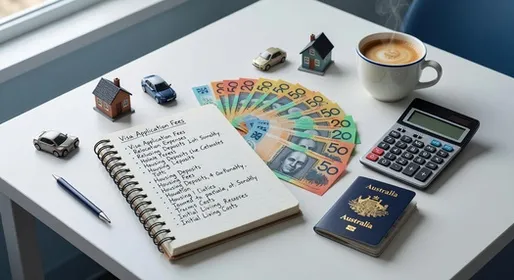
| Cost Component | Amount (AUD) |
|---|---|
| Visa application charge (primary applicant) | $9,365 |
| Additional applicant (dependent child under 18) | $2,350 |
| Additional applicant (dependent child 18+) | $4,700 |
| Health examination | $300 - $500 |
| Police clearances | $42 - $300+ |
| Document translations (if applicable) | $100 - $500 |
| Migration agent fees (optional) | $3,000 - $6,500 |
The visa application charge is non-refundable, even if the application is refused or withdrawn. Given the financial stakes - potentially $10,000 to $16,000+ including agent fees and supporting costs - many couples invest in a partner visa agent to ensure their application is thoroughly prepared. For a comparison of agent fees across all visa types, see our migration agent cost guide.
Processing Times
Partner visa processing times can be lengthy. As of early 2026, the Department of Home Affairs estimates processing times for the onshore temporary partner visa (Subclass 820) at approximately 15 to 24 months. The permanent stage (Subclass 801) cannot be assessed until at least two years after the initial application, and typically takes an additional 12 months once you become eligible.
While waiting, the applicant is generally granted a Bridging Visa A, which allows them to remain in Australia lawfully with work rights. If you need to travel overseas during the waiting period, you will need to apply for a Bridging Visa B before departing.
Submitting a complete, well-documented application from the outset is the most effective way to minimise processing time. Incomplete applications or requests for additional information from the Department can add months to the timeline.
Onshore vs Offshore Partner Visa
The onshore pathway (820/801) and offshore pathway (309/100) lead to the same outcome - permanent residency - but differ in where you must be when you apply and when certain decisions are made. The onshore visa requires you to be in Australia at the time of application and for the 820 decision. The offshore visa requires you to be outside Australia when you apply and when the 309 decision is made.
If you are currently in Australia on another visa and your relationship has developed here, the onshore pathway is usually the most practical option. If your partner is overseas, the offshore pathway or a Prospective Marriage Visa (Subclass 300) - which allows an engaged partner to enter Australia and marry before applying onshore - may be more appropriate. A partner visa lawyer can advise on which pathway suits your specific circumstances.
Common Mistakes and How to Avoid Them
Partner visa applications have a high refusal rate compared to many other visa types, often due to avoidable errors. Common pitfalls include providing insufficient or one-dimensional evidence of the relationship (for example, only photos with no financial or household evidence), failing to address all four assessment areas, submitting statutory declarations that are too generic or that contradict each other, not disclosing previous visa refusals or character issues, and underestimating the documentation required.
Another common issue is inconsistency between what the applicant and sponsor state in their personal declarations and what the supporting evidence shows. The Department cross-checks details carefully, and contradictions - even minor ones - can raise doubts about the genuineness of the relationship. Having your declarations reviewed by a professional before submission can prevent this.
Given the $9,365 government fee and the emotional stakes involved, a refused partner visa application is a costly and devastating outcome. This is one of the visa categories where engaging a registered partner visa agent is most commonly recommended - they know exactly what the Department looks for and can help you compile evidence that tells your story effectively. For tips on finding the right professional, see our guide on how to choose a migration agent.
Applying for a Partner Visa?
With over $9,365 in government fees at stake, getting your application right the first time is critical. A partner visa agent can help you compile compelling evidence and prepare a decision-ready application. Browse our directory of MARA-registered migration agents across Australia.
Frequently Asked Questions
How long does the partner visa take to process?
The temporary Subclass 820 currently takes approximately 15 to 24 months. The permanent Subclass 801 cannot be assessed until at least two years after lodgement and typically takes an additional 12 months. Couples in long-term relationships (3+ years together, or 2+ years with a child) may have both stages processed together.
Can I work in Australia while waiting for my partner visa?
Yes. When you lodge an onshore partner visa application, you are generally granted a Bridging Visa A with full work rights. This allows you to live and work in Australia lawfully while your application is being processed.
Does Australia recognise de facto and same-sex relationships?
Yes. Australia recognises both de facto and same-sex relationships for partner visa purposes. De facto couples must generally demonstrate at least 12 months of cohabitation, unless the relationship is registered under an Australian state or territory relationship registration scheme.
What happens if our relationship breaks down during processing?
If your relationship ends before the visa is granted, the application will generally be refused. There are limited exceptions in cases of family violence or where there are dependent children involved. An immigration lawyer can advise on your options if your circumstances change during processing.
Can I include children in my partner visa application?
Yes. Dependent children can be included as secondary applicants. Additional visa application charges apply for each child. All included family members must meet health and character requirements.
Do I need a migration agent for a partner visa?
It is not legally required, but the partner visa has one of the highest refusal rates and the highest government fee of any family visa. Compiling compelling evidence across all four assessment areas requires careful strategy. A registered partner visa agent can significantly strengthen your application. Always verify their MARA registration before engaging.
Disclaimer: This article is for general informational purposes only and does not constitute migration advice. Under the Migration Act 1958, only registered migration agents and Australian legal practitioners are authorised to provide immigration assistance. Partner visa applications involve complex evidence requirements and every relationship is different. Before making any decisions about your visa or migration matter, consult a registered migration agent or qualified legal practitioner. You can verify an agent's registration on the MARA website.